US road rules
Who has the right of way at a two-way stop?
The traffic that does not have a stop sign. At a two-way stop only your road stops; the cross street keeps going, so after a full stop at the line you wait until no car on it is close enough to be a hazard, then go. A YIELD sign asks for the same wait without the mandatory stop: slow down, stop only if someone is coming, and go when nobody has to brake for you.
The rule
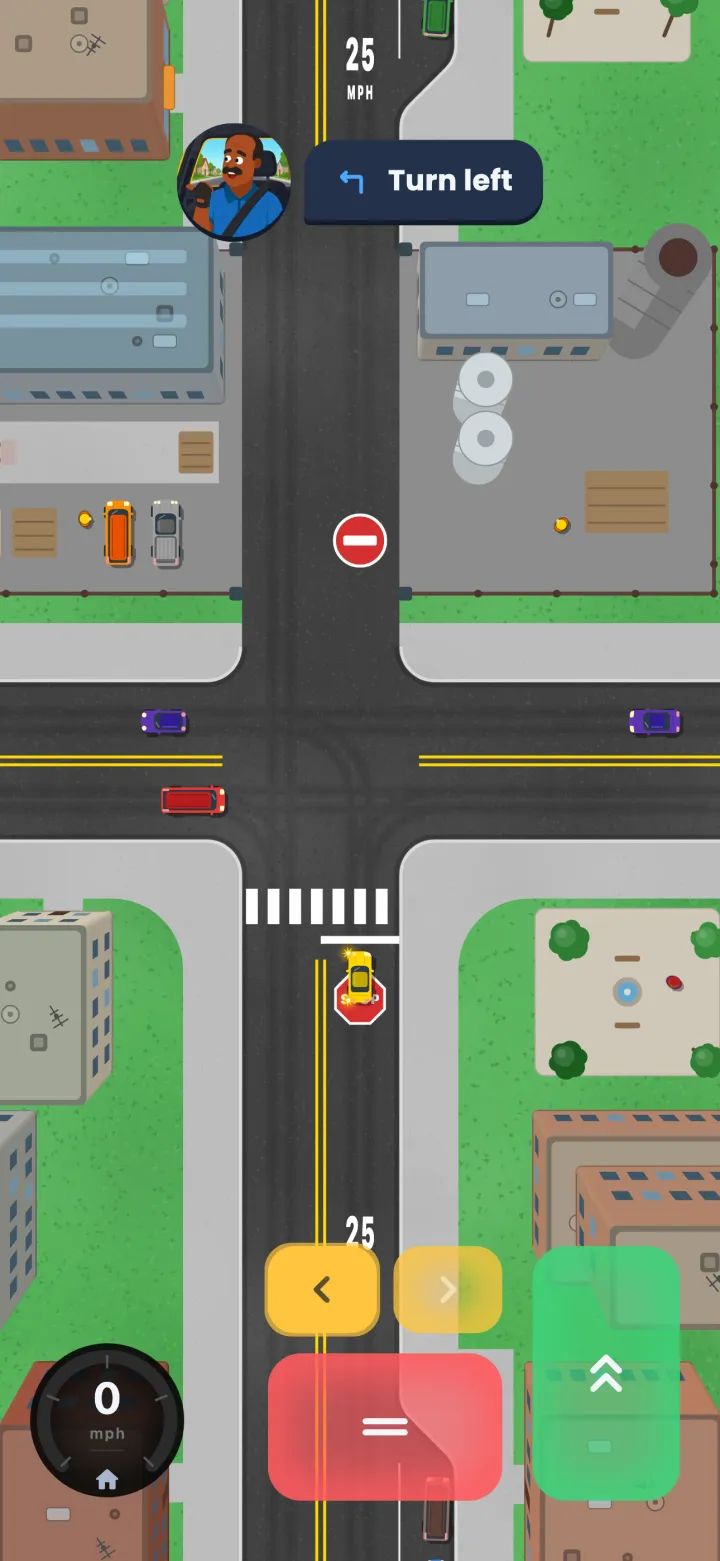
- Stop at the limit line. With no line, stop before the crosswalk; with neither, stop before you enter the cross street, where you can see it.
- After the stop, yield to cars already in the intersection and to any car on the cross street close enough to be a hazard. Keep waiting until you can go safely.
- If the cross street has no stop sign, its traffic is not going to stop for you, even if the intersection looks like a four-way stop.
- Once you have yielded and pulled out, the traffic coming up has to let you finish crossing. Do not stop halfway.
- A YIELD sign means slow down and be ready to stop. If nobody is coming, you may go without stopping; if someone is, stop and let them pass.
Where drivers get it wrong
- Stopping, then going. The stop is only half the rule. A full stop followed by pulling out in front of a car on the cross street is still failing to yield.
- Treating it like a four-way stop. Waiting for the cross traffic to stop and wave you on. It has no sign and is not going to stop.
- Rolling it because the road looks empty. A rolling stop at a two-way stop is still a rolling stop, even for a right turn, and a common road-test fail.
- Stopping dead at an empty yield sign. A yield sign does not require a stop when nothing is coming. Sitting at it with a clear road holds up the cars behind you.
Who yields at a T-intersection?
The road that ends yields to the road that goes through. With a stop sign on the end of the T, the stop-sign rule already says so. With no sign at all, California's handbook says traffic on the through road, the one continuing straight, has the right-of-way, and Arizona's law says it outright: the driver on the terminating street yields to the one on the continuing street.
This replaces the usual tie-breaker. At an unmarked crossroads, when two cars arrive at once, the one on the left yields to the one on the right. At a T, the through road goes first whichever side the cars are on.
Do you have to stop at a yield sign?
Only if traffic or a pedestrian makes you. California asks you to slow down and be ready to stop; Texas says slow to a speed that is reasonable for the conditions; New York says you must come to a full stop if traffic conditions require it.
The catch: in Texas, if you drive past a yield sign without stopping and collide with a car in the intersection, the crash itself is prima facie evidence that you failed to yield. If in doubt, stop.
How Yield tests it
Yield has both. Its T-junctions are two-way stops: your road ends at a stop sign, the through road never stops, and no full stop at the line is Rolling stop or Ran the stop sign. After the stop, the game grades the gap you take, not whether the other driver brakes: pull out with about a second to spare or less and it is Failed to yield. Its yield-sign crossroads skip the stop entirely: slow down, take a real gap in the main road, and do not sit at the line when the road is clear.
- Rolling stop
- Ran the stop sign
- Failed to yield
- Blocked the intersection
Stopping is not yielding. After the stop, wait for a gap you can pull into without the through traffic braking.
Ray, your instructor in Yield
Rules differ from state to state, and where they do, your state's driver handbook is the one that counts. Yield is practice, not driver's ed or legal advice. Sources: California Driver Handbook: Laws and Rules of the Road; California Vehicle Code §21802 (stop signs); California Vehicle Code §21803 (yield signs); California Vehicle Code §22450 (where to stop); New York State Driver's Manual, Chapter 4: Traffic Control; Arizona Revised Statutes §28-773; Arizona Revised Statutes §28-771 (T intersections); Texas Transportation Code §545.153.