US road rules
How do you make an unprotected left turn?
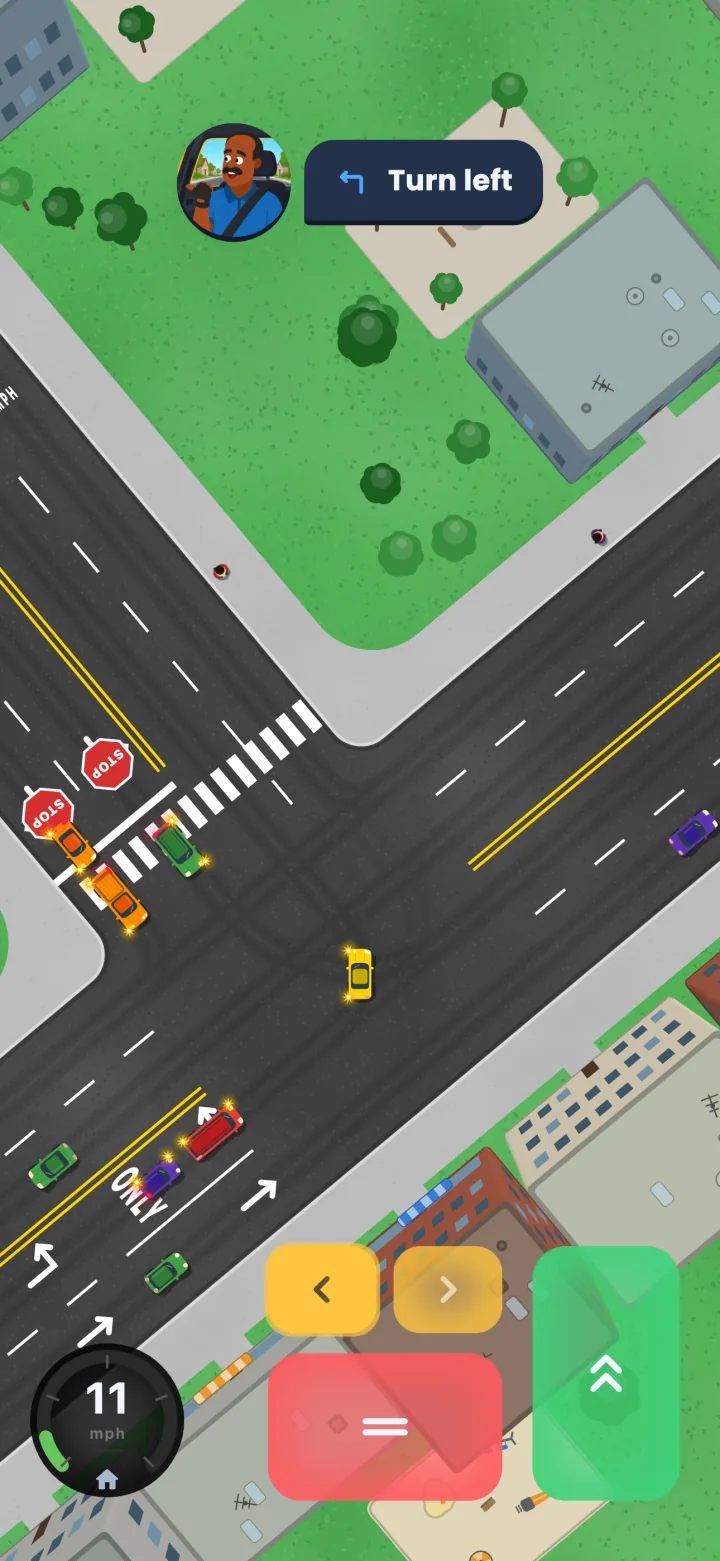
An unprotected left is a left turn on a plain green light, or with no light at all, where oncoming traffic does not stop for you. Signal, wait with your wheels pointed straight, yield to oncoming cars and to pedestrians, and turn only when the gap is big enough that nobody has to brake. Finish in the lane nearest the center line.
The rule
- Signal about 100 feet before the turn and move into the left-turn lane, or the lane closest to the center line.
- While you wait, keep your wheels straight. If someone hits you from behind with the wheels turned, you get pushed into oncoming traffic.
- Yield to every oncoming vehicle close enough to be a danger, and to pedestrians crossing the street you are turning into.
- Turn into the left lane of the new road, the one nearest the center line. Change lanes later if you need to.
Where drivers get it wrong
- Trusting the near lane. A car in the near lane can hide another one coming in the far lane. If you cannot see the far lane, it is not a gap.
- Turning the wheel early. Waiting with the wheels already cranked left is how a rear-end becomes a head-on.
- Swinging into the far lane. Cutting the turn wide lands you in the lane that belongs to drivers turning right onto the same road.
- Giving up and going straight. If you are in a left-only lane, the turn is your only legal move out of it.
Left turns on a one-way street
A one-way street has no oncoming traffic, so the left turn out of it is not really unprotected. What changes is where you start: the far-left lane, next to the left curb, not the middle of the road.
Turning from a one-way street onto a two-way street, finish in the left lane nearest the center line. Onto another one-way street, finish in the left lane, though California lets you end the turn in any open lane when the new street has three or more lanes going your way. Turning from a two-way street onto a one-way street, start next to the center line as usual; the same three-lane rule decides where you can finish.
Left on red: from a one-way street onto another one-way street, most states let you turn left on a red light after a full stop, unless a sign says no. Yield to the traffic, pedestrians and bicyclists who have the green. Not every state allows it, and New York City never does.
How Yield tests it
Yield grades the gap, not the brakes: if you commit across oncoming traffic with too little room, that is Failed to yield, and stopping across the center line so they have to stop is Blocked the intersection. On two-lane roads it also checks where you land: the far lane is Turned into the wrong lane.
- Failed to yield
- Blocked the intersection
- Turned into the wrong lane
- Went straight out of the turn lane
Oncoming traffic does not stop for you here. Wait in the pocket for a gap across both lanes, and watch that a car in the near lane is not hiding one in the far lane.
Ray, your instructor in Yield
Rules differ from state to state, and where they do, your state's driver handbook is the one that counts. Yield is practice, not driver's ed or legal advice. Sources: California Driver Handbook: Navigating the Roads.