US road rules
When do you have to use your turn signal?
Before every turn and every lane change, and early: most state handbooks say at least 100 feet before you turn, and more at highway speeds. Signal even when the road looks empty. The point is warning, so the signal goes on before you move.
The rule
- Turning: signal about 100 feet before the turn. California's handbook says exactly that.
- Changing lanes or merging: signal, check your mirror and blind spot, then move. Give the traffic around you a few seconds of notice.
- Leaving a highway: California asks for about five seconds, roughly 400 feet, before the exit.
- Pulling away from the curb counts as a lane change. Signal it.
- Cancel the signal once you are done, or the driver behind will expect another turn.
Where drivers get it wrong
- Signaling while already moving. A blinker that comes on halfway through the lane change warns nobody.
- Skipping it when the road looks empty. The car you did not see is exactly who the signal is for.
- Signaling too early. Blinking a block before your turn tells drivers you are turning at the first side street.
How Yield tests it
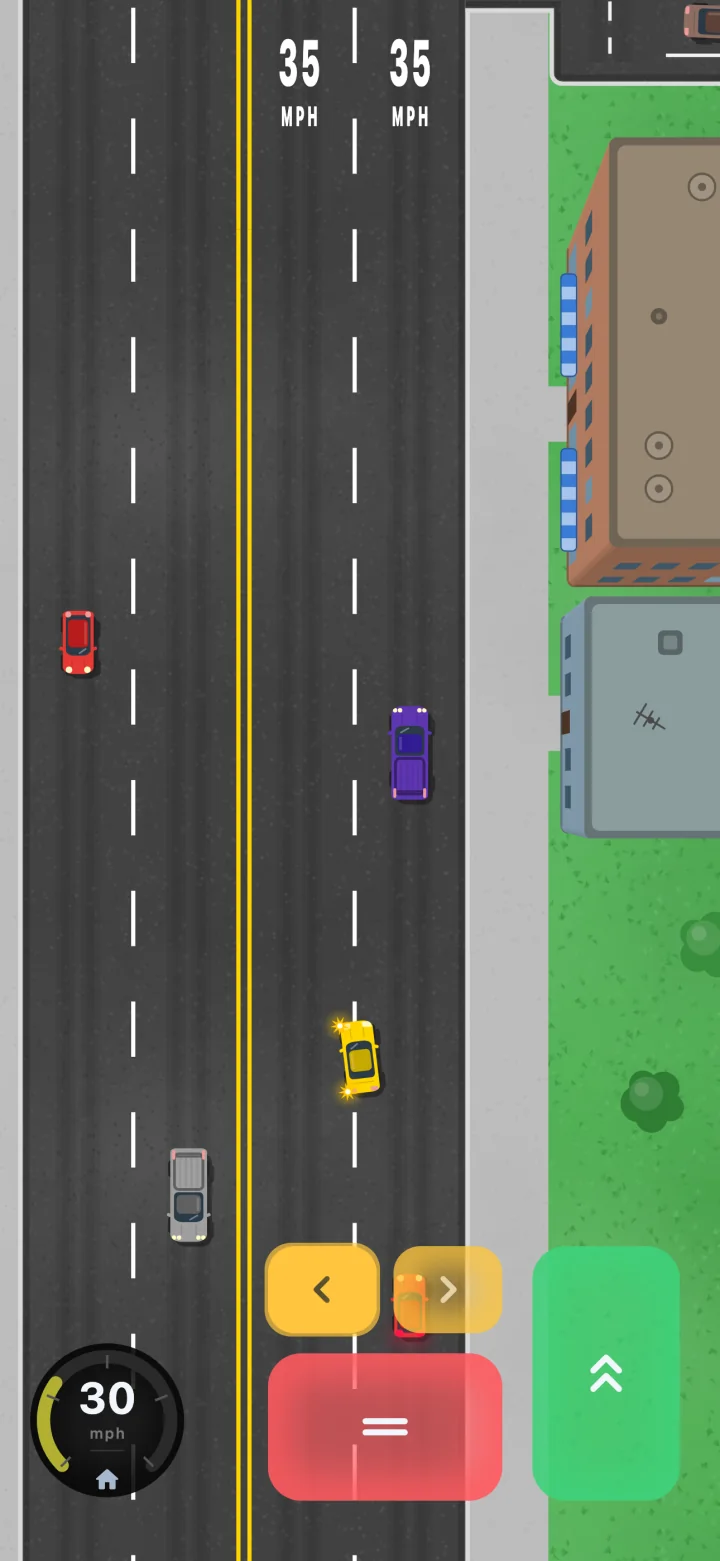
There is no auto-signal in Yield. You work the blinker by hand, it cancels itself after the turn or lane change like a real one, and the move is graded the moment it happens: Turned without signaling or Changed lanes without signaling.
- Turned without signaling
- Changed lanes without signaling

Signal before you move, not while you are moving. Give the traffic around you a couple of seconds of notice.
Ray, your instructor in Yield
Rules differ from state to state, and where they do, your state's driver handbook is the one that counts. Yield is practice, not driver's ed or legal advice. Sources: California Driver Handbook: Navigating the Roads.