US road rules
How do you merge when a lane ends or is blocked?
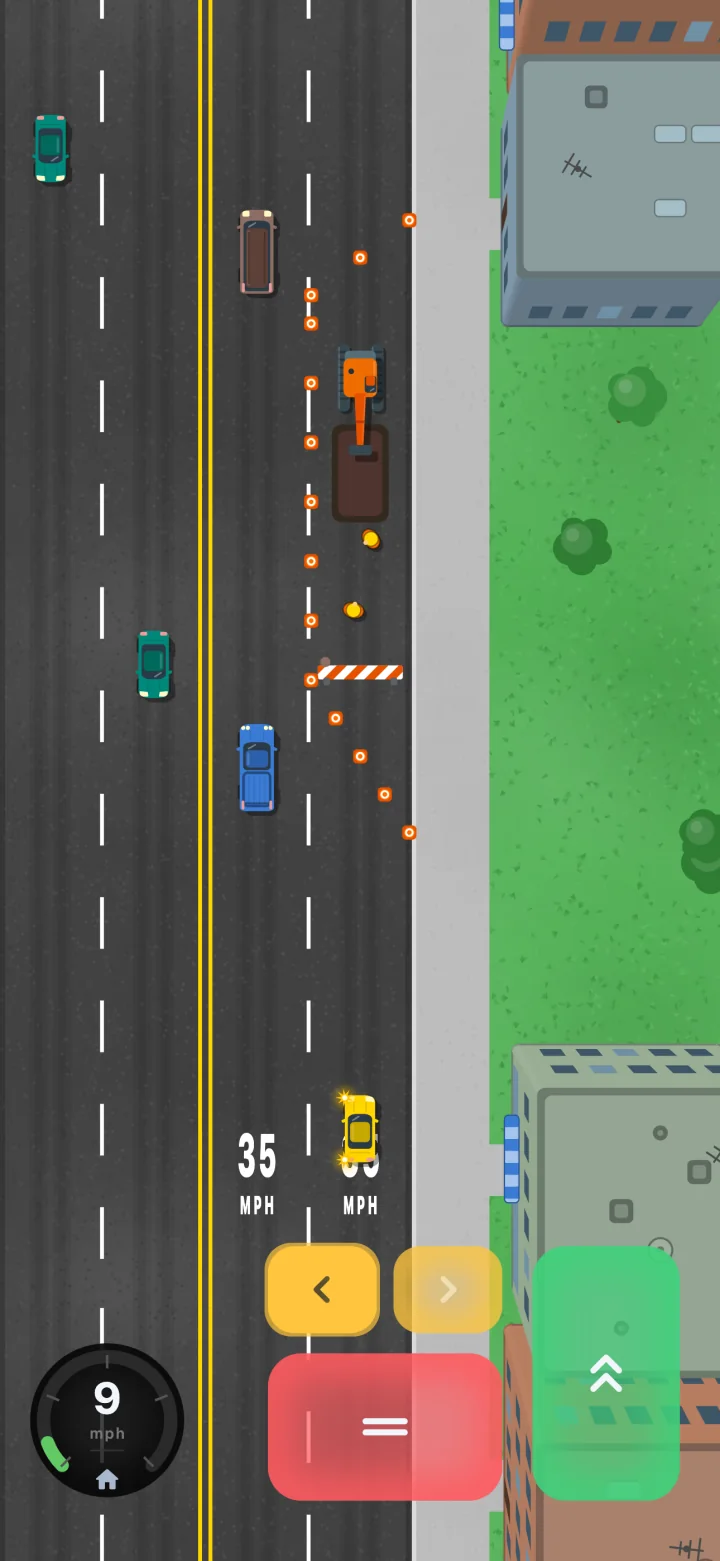
The lane that ends is the lane that gives way. Signal, match the speed of the traffic you are joining, and move into a gap without making anyone brake. In heavy, slow traffic at a lane closure, many state transportation departments ask drivers to use both lanes up to the merge point and then take turns, the zipper merge.
The rule
- Signal early and check your mirror and blind spot before you move.
- The traffic already in the open lane has the right of way. Fit into a gap; never force one.
- Move all the way into the open lane, pass the blockage, and come back only when it is clear.
- Work zones have lower limits, and in many states fines are doubled in work zones.
- Every state has a Move Over law: for a stopped emergency vehicle with its lights on, change out of the lane next to it, or slow down if you cannot.
Where drivers get it wrong
- Forcing the merge. Squeezing into a gap that is not there makes the other driver brake for you. That is a cut-off.
- Stopping dead behind the blockage. Sitting still in a live lane holds up everyone behind you. Slow early, signal, and take the first real gap.
- Straddling the line. Half in one lane and half in the other is not passing. Commit to the open lane.
Is the zipper merge the law?
In Utah, yes. Since May 2022, state law requires the zipper method wherever two congested lanes merge into one: both lanes stay in use up to the merge point, then drivers take turns. Ignoring it is an infraction.
In most other states the zipper merge is advice, not a statute. Transportation departments in Minnesota, Missouri, Kansas and others promote it, and Illinois teaches it in its Rules of the Road handbook. Everywhere, the underlying law is the same: the lane that ends yields, and nobody may cut anyone off. Zipper merging is for slow, heavy traffic; when traffic is moving at speed, merge early into a real gap.
How Yield tests it
Yield closes lanes with work zones, broken-down cars, delivery trucks, buses and police stops. Going around one is a normal lane change, so it needs a signal. Forcing in is Cut off a driver or Failed to yield, straddling past is Squeezed past an obstruction, dawdling is Blocked the road, and the work zone has its own lower limit.
- Cut off a driver
- Failed to yield
- Squeezed past an obstruction
- Sped through a work zone
The open lane belongs to the traffic already in it. Hold behind the blockage until there is room, then signal and go.
Ray, your instructor in Yield
Rules differ from state to state, and where they do, your state's driver handbook is the one that counts. Yield is practice, not driver's ed or legal advice. Sources: California Driver Handbook: Navigating the Roads; MnDOT: Zipper merge; Utah Code §41-6a-903.1 (2022 HB 76); NHTSA: Move Over, It's the Law.