US road rules
When do you have to stop for pedestrians?
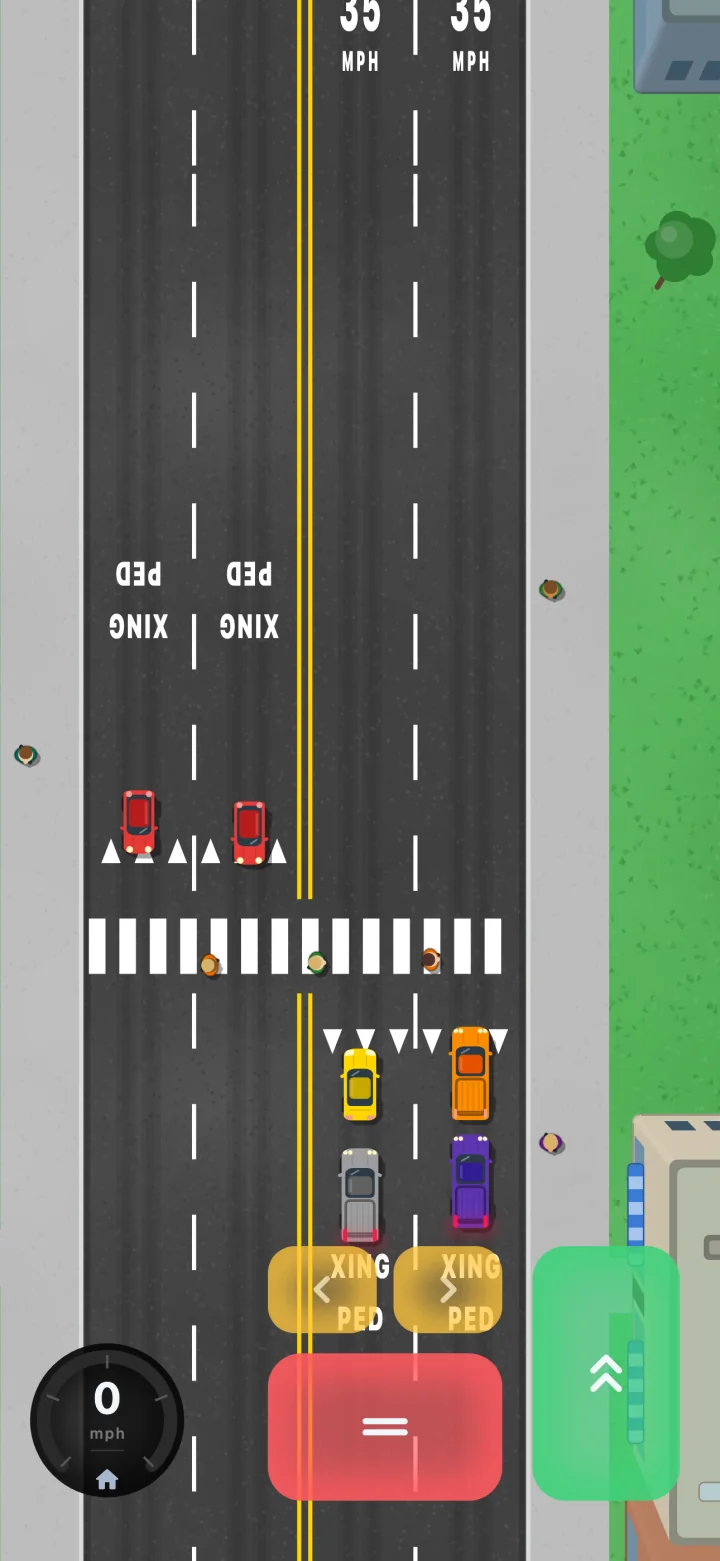
Whenever someone is in a crosswalk on your side of the road, or stepping into your path. Pedestrians have the right of way in marked and unmarked crosswalks, and not every crosswalk is painted: where sidewalks meet at an intersection, there usually is one. Stop before the crosswalk and stay stopped until they are clear of your lane.
The rule
- At an intersection, the crosswalk usually runs where the sidewalks meet, painted or not. A painted one in the middle of a block counts too.
- Stop before the crosswalk, not on it. The space past the line belongs to people crossing.
- How long you wait depends on your state. Washington, for one, says you stay stopped while the person is on your half of the road or within one lane of it. Waiting until they reach the far curb is never wrong.
- Never pass a car that has stopped at a crosswalk. It is illegal in most states, and that driver can see someone you cannot.
- Turning at a light? People crossing the street you turn into often have a walk signal at the same time as your green. They go first.
Where drivers get it wrong
- Creeping in behind them. Rolling forward as soon as the person passes your bumper scares them and blocks the next walker.
- Passing the stopped car. The car in the next lane stopped for a reason. Going around it is how pedestrians get hit.
- Ignoring the unmarked corner. No paint does not mean no crosswalk. Where the sidewalks meet, expect people to cross.
How Yield tests it
Yield's midblock crosswalk has no light and no stop line, so the judgment is all yours: people walk up from the sidewalks and step onto the stripes, and if you keep going while someone is on your half, that is Failed to yield to a pedestrian. Getting too close is a fault of its own, even without contact.
- Failed to yield to a pedestrian
- Passed too close to a pedestrian
- Stopped over the line
No light, no stop line, so the judgment is all yours. If someone is on your half or stepping toward it, stop and let them finish.
Ray, your instructor in Yield
Rules differ from state to state, and where they do, your state's driver handbook is the one that counts. Yield is practice, not driver's ed or legal advice. Sources: California Driver Handbook: Laws and Rules of the Road; California Vehicle Code §21951; Washington RCW 46.61.235.