US road rules
Can you turn right on red?
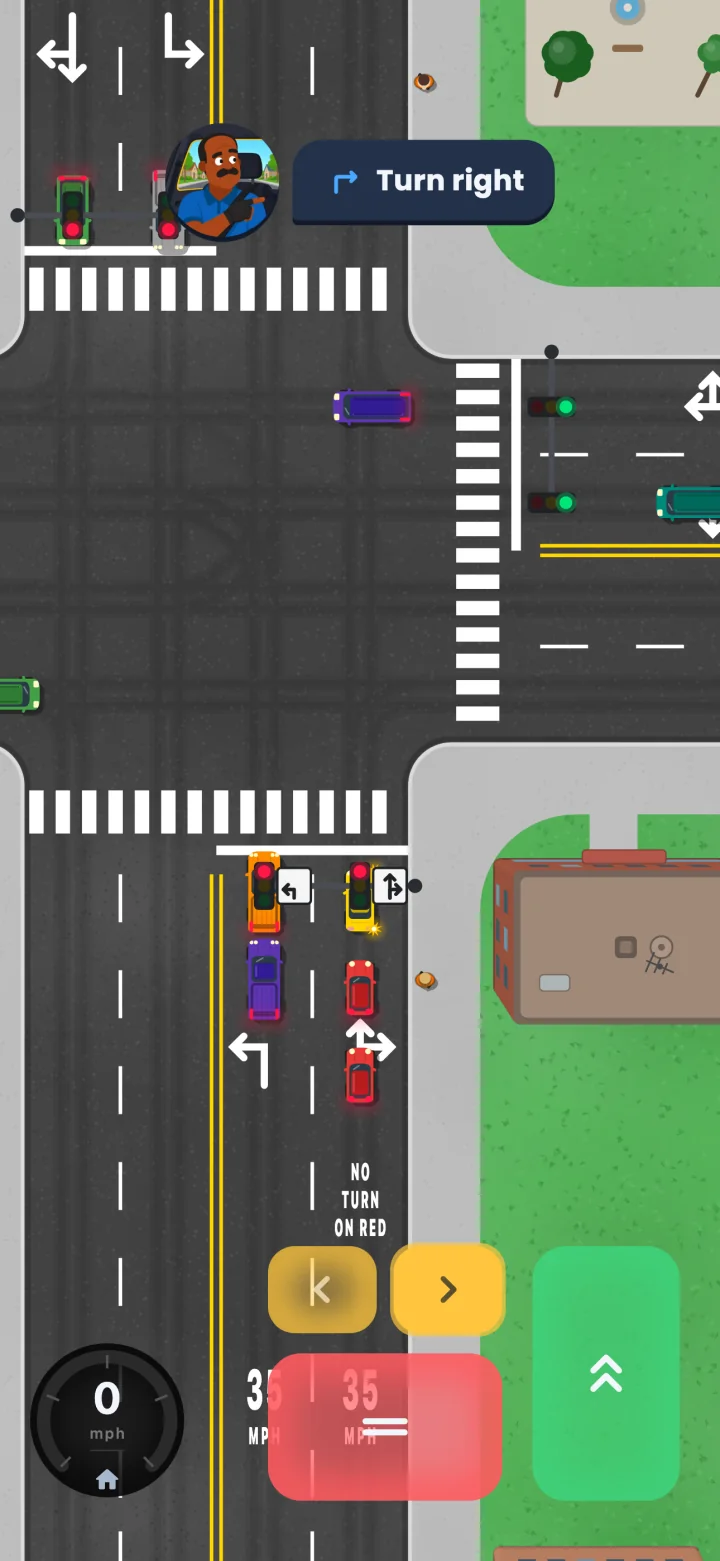
Yes, in every US state, but only after a complete stop, and only once pedestrians and cross traffic have gone. A NO TURN ON RED sign overrides it. The big exceptions are two cities: New York City and Washington, DC, where turning on red is illegal unless a sign permits it.
The rule
- Stop completely at the stop line, or before the crosswalk if there is no line.
- Yield to pedestrians crossing in front of you and on the street you are turning into, then to the traffic that has the green.
- Turn into the nearest lane, the right lane, and only when the gap is real.
- A NO TURN ON RED sign means wait for green. In New York State a red arrow also means no turn; other states differ, so check yours.
- New York City bans turning on red unless a sign allows it. Washington, DC joined it on January 1, 2025: no right on red unless a sign allows it, with a $100 fine where the ban is signed.
- Left on red is a separate rule: allowed from a one-way street onto another one-way street in most states, not in all of them, and never in New York City.
Where drivers get it wrong
- Rolling the right. A right on red without a full stop is treated as running the light, and it is the classic camera ticket.
- Looking only left. Drivers watch for cars and miss the person stepping off the curb on the right. Look right, then left, then right again.
- Missing the sign. NO TURN ON RED signs hang near the signal, not on the corner. Look for one every time.
What is a free right turn?
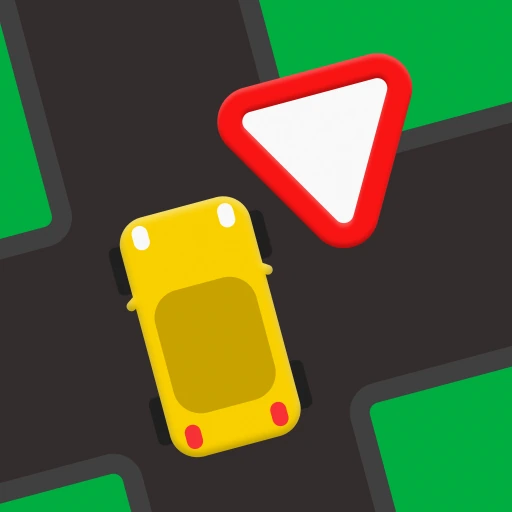
A free right turn, also called a slip lane or channelized right turn, is a separate right-turn lane that cuts the corner, split off from the intersection by a painted or raised triangle island. It usually has no light of its own, so you do not stop for the red signal; you follow the sign at the end of the lane instead.
Most slip lanes end at a YIELD sign: slow down, give way to people in the crosswalk across the slip lane and to the traffic you are joining, and stop if you have to. If the slip lane feeds its own added lane on the new street, there is no one to merge with and you can keep going. If it ends at a stop sign or has its own signal, obey that.
How Yield tests it
Yield paints the rule on the road: when a lane says NO TURN ON RED, turning out of it on red is Ran a red light. Where the turn is allowed, the light checks the facts at the line: you must have been stopped there before you go, or it is Rolled a right on red. After the stop, the turn is graded as a yield against the cross traffic.
- Rolled a right on red
- Ran a red light
- Failed to yield

Right on red is legal only after a complete stop. Stop at the line, look left, wait for your gap, then turn. Rolling through it is running the light.
Ray, your instructor in Yield
Rules differ from state to state, and where they do, your state's driver handbook is the one that counts. Yield is practice, not driver's ed or legal advice. Sources: California Driver Handbook: Laws and Rules of the Road; New York State Driver's Manual, Chapter 4: Traffic Control; NBC Washington: Right turns on red now banned in DC.